The Bridge - River Kwai
The Bridge That Slows Your Steps
There are places that never ask you to stop walking. Yet somehow, they make you slow down.
No sign tells you to lower your voice. No guide asks you to pause for a moment. Still, as visitors step onto the Bridge over the River Kwai, their pace often softens without a conscious thought. It is as if the bridge itself quietly sets the rhythm, inviting every traveller to move with greater awareness.
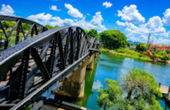
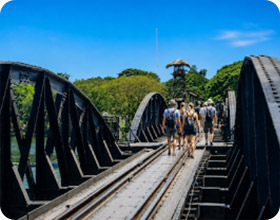
Ahead stretches the familiar steel structure across the gentle flow of the Khwae Yai River. Several times each day, trains continue to cross the bridge, just as they have for decades. Long before the locomotive comes into view, the sound of steel wheels meeting steel rails begins to echo through the valley. People calmly step onto the narrow refuges beside the track, waiting in silence as the train rolls past. There is no rush, no shouting, only countless eyes following its slow passage until the sound gradually disappears and the quiet returns once more.
It is often in those brief moments that visitors realise this is far more than a famous landmark. It remains a place that continues to live its ordinary life, every single day.
Where History Walks Beside the Present
The Bridge over the River Kwai forms part of the historic Thailand–Myanmar Railway, constructed during the Second World War under extraordinarily harsh conditions by Allied prisoners of war and Asian civilian labourers. Thousands lost their lives during its construction, giving rise to the name by which the railway is known around the world—the Death Railway.
Yet the bridge is remembered for more than tragedy alone.
Over the years, it has become a place of remembrance, reflection, and understanding. Visitors from every corner of the world come not only to see an iconic structure, but to stand where history unfolded, to look across the peaceful river below, and to appreciate how the past continues to exist within the landscape of the present.
If You Come, Give It More Than a Photograph
A photograph on the bridge is a memory worth keeping.
But the bridge offers something even more meaningful to those willing to stay a little longer.
Walk from one end to the other without hurrying. Watch the river flowing quietly beneath the steel beams. Notice how the bridge still carries trains across the river, just as it has for generations. If time allows, wait for a train to arrive. That simple experience often tells the story more powerfully than any museum display or information board ever could.
Morning brings soft light filtering through the steel framework onto the river below, creating an atmosphere of remarkable calm. By late afternoon, warm golden light transforms the bridge and its reflections into one of Kanchanaburi's most memorable scenes, a favourite moment for photographers and travellers alike.
A Story Many Visitors Discover Only After Arriving
For many international travellers, the name "Bridge over the River Kwai" was first encountered through the famous film long before they ever visited Thailand.
What surprises many is that the bridge originally crossed the Mae Klong River. It was only later that this section of the river was officially renamed the Khwae Yai River, allowing the real place to share the name by which millions around the world had already come to know it. It is a remarkable example of how history, culture, and travel can shape the identity of a place across generations.
The JC Tour Perspective
For us, the Bridge over the River Kwai is never simply the first stop on an itinerary.
It is the opening chapter of Kanchanaburi's larger story.
After crossing the bridge, the journey becomes richer as it continues to Tham Krasae, Hellfire Pass, and the historic Death Railway. Each destination reveals another layer of the same narrative, allowing travellers to understand not only what happened here, but why these places continue to resonate with visitors from around the world.
And perhaps, when you finally leave the bridge behind, the most valuable memory you carry home will not be the photograph you captured that day. It may simply be a quiet feeling—one that deepens your appreciation for peace, inspired by an unassuming steel bridge that continues to span the river with quiet dignity, just as it has for generations.
Choose a trip or package to visit the Bridge over the River Kwai.
 |
Many travelers have visited Kanchanaburi, yet only a few have truly come to know it. This is a destination that never reveals itself to those who rush from one attraction to another. Instead, it quietly tells its story through the historic railway that still follows the cliffs above the River Kwai...... |
 |
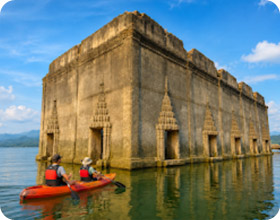 |
Kanchanaburi is far more than the famous Bridge over the River Kwai or the historic Death Railway. It is a destination where history, pristine nature, and local traditions have evolved together for generations, creating a landscape rich in stories waiting to be discovered...... |
|
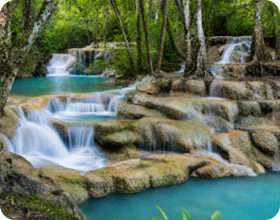 |
Kanchanaburi Grand Heritage Collection is JC Tour’s most complete journey through the province. Over five days and four nights, you will encounter the history of the Second World War, the beauty of the River Kwai, waterfalls and tropical forests, ancient civilisations, a former mining village surrounded by...... |
|
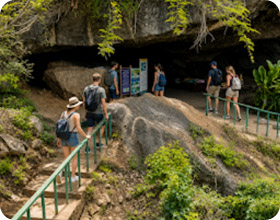 |
Over two days and one night, JC Tour guides you through the history of the Second World War in a carefully considered sequence. The journey follows the story of the Thailand–Burma Railway through the Bridge over the River Kwai, the Death Railway, Hellfire Pass and...... |
|
 |
If rivers could hold memories, Kanchanaburi would surely be one of the places where those stories are preserved most beautifully. Every drop of water flowing through Thailand’s western forests has nourished ancient trees, sculpted limestone into emerald waterfalls...... |
|
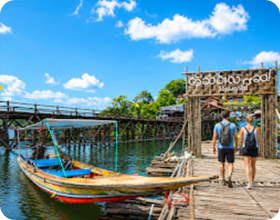 |
Sangkhlaburi is a destination where silence is as memorable as the landscape, and the stories of its people are every bit as meaningful as the mountains, the lake, and the morning mist. This journey begins with Kanchanaburi's most significant historical landmarks...... |
|
 |
JC Tour Heritage Collection has designed this experience around the concept of Three Worlds in One Day—bringing together history, nature, and adventure in a perfectly balanced itinerary. Every activity has been carefully selected...... |
|
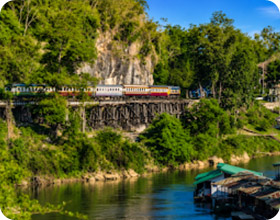 |
Kanchanaburi Heritage Journey has been thoughtfully designed for travellers who want to discover the province through its history, landscapes, and enduring legacy. From panoramic views at the Kanchanaburi Sky Walk to the...... |
|
Why Choose Jc.Tour?
- Licensed and Trusted: Jc.Tour is a fully licensed tourism company, registered under Thailand's law for both inbound (within Thailand) and outbound (international) travel. You can verify our registration at http://www.tourism.go.th (Outbound: 31/01235, Inbound: 34/00235).
- Highly Rated Service: Our commitment to excellent service and responsibility has earned us top rankings on TripAdvisor, ensuring a top-notch experience for every traveler.
- Comprehensive Insurance: We provide global accident insurance coverage for all our customers—whether you’re exploring Thailand or traveling internationally. This guarantees peace of mind no matter where your journey takes you.
- 24/7 Customer Support: Our team is available to assist you before, during, and after your trip, 24 hours a day, ensuring you're never without support when you need it.
- JC Tour operates by employing local residents as part of its service team, ensuring that your spending directly contributes to the income of the local community. This way, you can feel confident that your travel experience supports the people who call the area home.
Gathering complete information to ensure a 100% confident travel experience is not always easy, and saving time is essential. We recommend you Click to Customize My Trip.