Death Railway
Where the Railway Carries More Than Travelers
 |
 |
When the train departs Kanchanaburi Station, the rhythm of steel wheels begins almost quietly. Rice fields, small villages, and open countryside slip gently past the windows before the landscape gradually changes into limestone mountains and dense forest. Nothing moves too quickly. The scenery is never rushed, allowing every curve of the river and every hillside to reveal itself at its own pace. It feels as though the railway is reminding every traveler that some stories deserve time before they can truly be understood.
As the journey approaches Sai Yok, nature begins to embrace the railway more closely. The Khwae Noi River appears beside the tracks, disappearing and returning between the trees, while the mountains slowly draw nearer. Inside the carriage, conversations become softer as the train eases its speed. Faces turn instinctively toward the windows, waiting for one of the most remarkable stretches of railway in Southeast Asia.
Krasae Cave and the Wooden Cliffside Railway
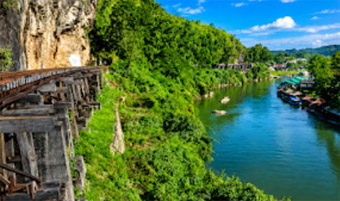
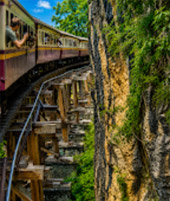
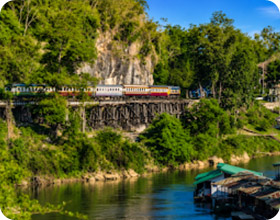
Here, the railway clings to a sheer limestone cliff above the Khwae Noi River. On one side rises a wall of ancient rock; on the other, the river flows quietly many meters below. Even today, the wooden viaduct appears almost impossible, following the natural curve of the mountain with a grace that belies the extraordinary effort required to build it.
Many visitors instinctively reach for their cameras, yet this is one of those places where the most lasting impression often comes after the photograph has been taken. Lower the camera for a moment. Let the breeze enter through the open window, listen to the steady rhythm of the train, and watch the river drift beneath the cliffs. The landscape gradually reveals something beyond its beauty. It becomes a place where memory, nature, and history exist together in quiet harmony.
A Railway Built Through Extraordinary Hardship
The Thailand–Myanmar Railway was constructed during the Second World War as a strategic military supply route. Tens of thousands of Allied prisoners of war, together with large numbers of Asian civilian laborers, were forced to work under extreme conditions. Tropical heat, disease, hunger, and relentless physical labor claimed countless lives, giving the railway the name by which it is known throughout the world—the Death Railway.
The section at Krasae was among the most demanding. With almost no level ground between the cliff and the river, workers first built timber supports projecting from the mountainside before laying the railway above them. Standing beside the tracks today, it is difficult not to admire the engineering achievement, but it is equally impossible to overlook the human endurance that made it possible. Every beam, every rail, and every curve of the viaduct carries a story that extends far beyond engineering alone.
A Small Cave Filled with Quiet Reflection
Just a short walk from the railway lies Krasae Cave, a modest limestone cave that once provided shelter for forest monks. Today, a peaceful Buddha image rests inside, inviting visitors to pause in silence. Cool air fills the chamber while soft natural light filters through the entrance, creating an atmosphere that feels remarkably calm despite the weight of history surrounding it.
Stepping outside, the view opens once again to the railway curving along the cliff above the gentle flow of the Khwae Noi River. Few places in Thailand bring together natural beauty, spiritual serenity, and historical significance with such effortless balance. It is this quiet coexistence that leaves the deepest impression.
A Place Best Experienced Slowly
Many travelers stop here briefly before continuing their journey, yet Krasae rewards those who choose to linger. Walk slowly along the wooden walkway beside the cliff. Watch the river below. Listen to the wind moving through the valley. If another train happens to arrive, pause and simply observe as it rounds the curve with unhurried elegance, its wheels echoing softly against the limestone walls.
For many visitors, this is the most beautiful viewpoint in Kanchanaburi. For us at JC Tour, however, its value reaches beyond scenery alone. Every meter of railway stands as a quiet reminder that what appears peaceful today was once achieved through extraordinary sacrifice.
The Best Time to Visit
Morning offers the finest light for exploring Krasae Cave and the surrounding railway. Gentle sunlight touches the limestone cliffs, temperatures remain comfortably cool, and the atmosphere is still wonderfully peaceful before larger numbers of visitors arrive.
If your schedule allows, plan your visit around the train timetable. Watching the train emerge from the forest and glide across the cliffside viaduct is one of those moments that stays with travelers long after the journey has ended.
The JC Tour Perspective
We have never regarded the Death Railway simply as a tourist attraction. To us, it is an open-air classroom where history is told not through museum displays, but through mountains, rivers, weathered timber, and the enduring silence of the landscape itself.
We recommend experiencing these places as a connected journey—beginning at the Bridge over the River Kwai, continuing to Hellfire Pass, and finally arriving at Krasae Cave aboard the historic railway. Together, they reveal not only the events of the past, but also the resilience, sacrifice, and humanity that continue to give this landscape its enduring significance.
When the train finally disappears beyond the curve of the mountain, the sound of steel wheels gradually fades into the distance. The river continues its gentle course beneath the cliffs, just as it has for generations.
Perhaps that is why so many people return to Krasae. They come not simply for the view, but for the rare opportunity to stand in a place where remarkable natural beauty and profound human history remain inseparable—reminding us that the greatest journeys are often measured not by the distance we travel, but by the understanding we carry home.
Choose a trip or package to visit the Death Railway.
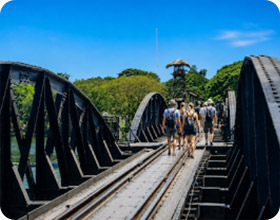 |
Many travelers have visited Kanchanaburi, yet only a few have truly come to know it. This is a destination that never reveals itself to those who rush from one attraction to another. Instead, it quietly tells its story through the historic railway that still follows the cliffs above the River Kwai...... |
 |
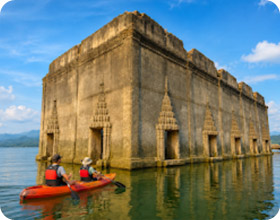 |
Kanchanaburi is far more than the famous Bridge over the River Kwai or the historic Death Railway. It is a destination where history, pristine nature, and local traditions have evolved together for generations, creating a landscape rich in stories waiting to be discovered...... |
|
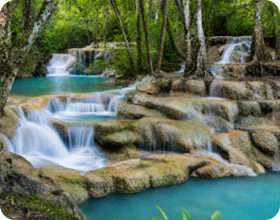 |
Kanchanaburi Grand Heritage Collection is JC Tour’s most complete journey through the province. Over five days and four nights, you will encounter the history of the Second World War, the beauty of the River Kwai, waterfalls and tropical forests, ancient civilisations, a former mining village surrounded by...... |
|
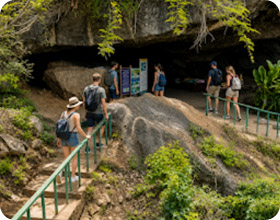 |
Over two days and one night, JC Tour guides you through the history of the Second World War in a carefully considered sequence. The journey follows the story of the Thailand–Burma Railway through the Bridge over the River Kwai, the Death Railway, Hellfire Pass and...... |
|
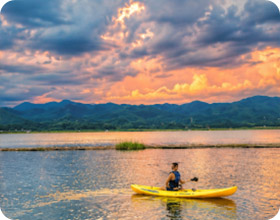 |
If rivers could hold memories, Kanchanaburi would surely be one of the places where those stories are preserved most beautifully. Every drop of water flowing through Thailand’s western forests has nourished ancient trees, sculpted limestone into emerald waterfalls...... |
|
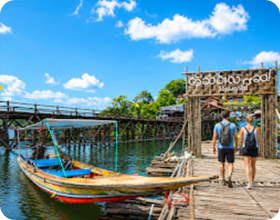 |
Sangkhlaburi is a destination where silence is as memorable as the landscape, and the stories of its people are every bit as meaningful as the mountains, the lake, and the morning mist. This journey begins with Kanchanaburi's most significant historical landmarks...... |
|
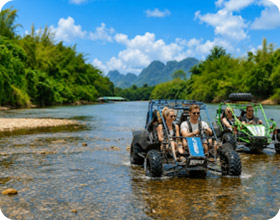 |
JC Tour Heritage Collection has designed this experience around the concept of Three Worlds in One Day—bringing together history, nature, and adventure in a perfectly balanced itinerary. Every activity has been carefully selected...... |
|
 |
Kanchanaburi Heritage Journey has been thoughtfully designed for travellers who want to discover the province through its history, landscapes, and enduring legacy. From panoramic views at the Kanchanaburi Sky Walk to the...... |
|
Why Choose Jc.Tour?
- Licensed and Trusted: Jc.Tour is a fully licensed tourism company, registered under Thailand's law for both inbound (within Thailand) and outbound (international) travel. You can verify our registration at http://www.tourism.go.th (Outbound: 31/01235, Inbound: 34/00235).
- Highly Rated Service: Our commitment to excellent service and responsibility has earned us top rankings on TripAdvisor, ensuring a top-notch experience for every traveler.
- Comprehensive Insurance: We provide global accident insurance coverage for all our customers—whether you’re exploring Thailand or traveling internationally. This guarantees peace of mind no matter where your journey takes you.
- 24/7 Customer Support: Our team is available to assist you before, during, and after your trip, 24 hours a day, ensuring you're never without support when you need it.
- JC Tour operates by employing local residents as part of its service team, ensuring that your spending directly contributes to the income of the local community. This way, you can feel confident that your travel experience supports the people who call the area home.
Gathering complete information to ensure a 100% confident travel experience is not always easy, and saving time is essential. We recommend you Click to Customize My Trip.